Author Archives: Amber Bales

Society of Ohio Archivists Call for Proposals: SOA 2027 Annual Meeting and OLHA 2027

The Society of Ohio Archivists (SOA) is pleased to welcome proposals for our SOA 2027 Annual Meeting and for the SOA sessions presented during the Ohio Local History Alliance (OLHA) Annual Meeting in 2027. 

Society of Ohio Archivists (SOA) Annual Meeting – What Makes Us Special

The Society of Ohio Archivists will hold our Annual Meeting on Thursday and Friday, May 20-21, 2027 in Columbus, Ohio. The in-person workshop portion of the conference (Thursday, May 20) will be held at the Columbus Metropolitan Library. The general conference (Friday, May 21) will be held at the Martin de Porres Center. #soaam27

This year we welcome proposals that explore the theme of What Makes Us Special. We encourage presentations that highlight different types of archives and special collections and their unique challenges and stories. 

Proposals may speak to any or all of the following topics: 

  • Distinctive collections and the histories, communities, or missions they document;
  • Case studies tackling specific problems and unique situations, such as processing, description, and preservation challenges across different repository types;
  • Creative approaches to access, instruction, digitization, and public engagement;
  • Advocating for specialized collections through funding and institutional support; or community partnerships that enrich collections and broaden representation;
  • Meeting recent transitions in user needs, whether that be the general public, students, remote users, or anyone else;
  • Celebrating the wins – everything from launching big ideas to accomplishing everyday small victories;
  • Other presentations of interest to SOA members and fellow archivists. Thinking outside of the box, both literally and figuratively!


The Educational Programming Committee encourages proposals of panel sessions, as well as alternative formats that encourage interaction between presenters and attendees. Please see the proposal form for more detailed information about alternative sessions. If you are curious about the proposal form, a PDF version is available for reference.

A separate call for posters will be sent out in February 2027.

Follow the conversation online at #soaam27


Proposal Guidelines 

Proposals will be evaluated on interest, creativity, relevance, diversity of content and speaker representation, and completeness of proposal. The Educational Program Committee also encourages proposals from students, new professionals, first-time presenters and attendees, individuals from related professions, as well as those from outside the state of Ohio. Deadline to submit proposals: January 25, 2027 at 5:00 p.m. Proposal Form


Proposals must include:

  • Session title and type;
  • Preference (if any) for an in-person or virtual session;
  • Abstract (250 words) describing the session/poster and how it will be of interest to SOA attendees, how it relates to this year’s theme, and how presenters will engage with participants;
  • Session description (150 words) for the program;
  • Contact information for the primary presenter and any other participants;
  • A/V or technology requirements; and
  • Any additional special needs.

Presentation Time Slots:

  • SOA Annual Meeting – 45-60 minutes
  • OLHA Annual Meeting and Conference – 40-50 minutes

We welcome proposals from presenters who may not be able to complete a time slot on their own and will work to combine presentations, where possible. Please indicate on the proposal form if you would like to be combined with another presentation to round out a slot. Proposals must be submitted by January 25, 2027 at 5:00 p.m. 

Proposal Form

Further meeting details will be posted on the meeting website as they develop. Accepted presenters will receive a discount on registration fees at a rate to be determined.

Questions? Please contact Adam Wanter or Meghan Crawford, Co-Chairs, Society of Ohio Archivists Educational Programming Committee. 
 

Archival Programming: How to Maintain Relevance and Gain Audiences

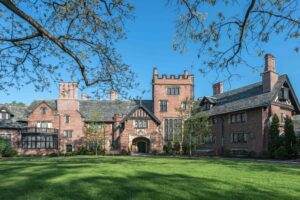
front image of stan hywet home


With the many distractions and overwhelming sources of entertainment currently fighting for attention in the modern age, archival institutions and museums must work to make themselves more relevant to gain or even maintain the attention of their audiences. As we reach the end of Archives Month, it’s even more important to consider different ways that archival institutions can engage with their local, state, and national audiences throughout the year.

As I’m sure all archive and museum professionals are aware, engagement with an audience can take many different forms, such as digitization efforts, public programs, exhibits, or social media. These efforts provide the public with relatable lenses through which they can understand and better appreciate the past. Archives are distinctly equipped to create these engaging lenses using correspondences, diaries, and photographs that showcase humanity and make history more relatable for a variety of audiences. This public engagement demonstrates an archive’s significance to historic preservation while also promoting historical discovery.

As part of the archival team at Stan Hywet Hall & Gardens, I have spent that last year working with our archivist, Barb Welch, to create programs that highlight our archive and share untold stories that enrich our interpretation of the Seiberling family. I hope that our work will inspire other archival institutions and museums to create similar programs that will help promote archives throughout the state and broader country.

Archival Programming at Stan Hywet

The Archives Department is relatively new at Stan Hywet Hall & Gardens (SHHG). In 2024, it was decided by leadership that the archives should be separated from the broader Collections Department so that care and focus could be better divided between both large collections of materials. The three main goals of the new Archives Department were to enhance the findability of the archival collections, begin digitization efforts that would make the archive more accessible to the public, and to create programs that incorporated new discoveries into the existing interpretation of the historic home and the family that lived in it.

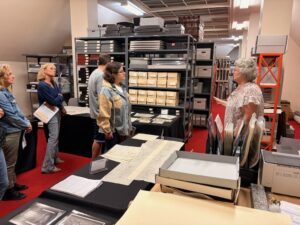
archival space with 4 people

In the last two years, many efforts have been made in all three goals, however, the most exciting centers around the design of several programs. The first of the programs created came about naturally as a way to announce the new department and showcase the archive collection in a new way. SHHG members were invited to come visit the archival storage space and talk with myself and Barb about specific archive materials we had chosen to display. This event became the first Secrets from the Archives, a program series that has become a big success amongst our members and everyday guests.

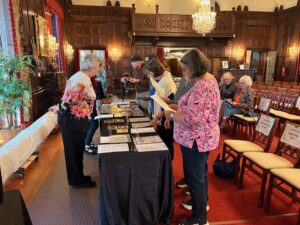
Each Secrets from the Archives has a specific theme so the chosen archive materials displayed tie together similar to an exhibit. During the program, Barb and I will discuss the theme, explain the chosen materials, and provide context. Guests are then invited to come and view the documents up close and ask questions. So far, we have created eight distinct Secret from the Archives programs focused on themes like travel, parties and events held at Stan Hywet Hall, and hobbies of several family members.

The program has demonstrated the often untapped potential of simply displaying archival documents and providing observers with enough context that they can find relatable strands of the human experience. Guests have expressed appreciation for the opportunity to see the archive materials in person and hear new stories about the historic house and its family. The more nuanced stories also make the Seiberling family members feel more familiar and likable as more of their unique personalities are displayed through their archival materials.

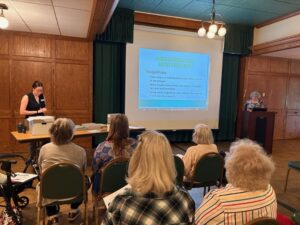
The newest program incorporated at SHHG seeks to provide guests with a uniquely archives-led tour of the historic estate. Walk with an Archivist centers around archival documents that enhance topics already discussed during tours, directly connecting the primary sources to the interpretation. Guests are provided with handouts with copies of photographs, blueprints, or excerpts of letters. The tour is then crafted around the archives featured within the handout and led by myself or Barb. The tour group then ends in the archival storage space where the guests can then see the original archival materials that are featured in the handout.presentation

The current Walk with an Archivist is focused on the construction of Stan Hywet Hall and references letters sent between family members and the contractors involved in the home’s design and construction, blueprints, and photographs documenting the construction process. The plan is to create new themes quarterly to freshen up the experience and provide new stories to our audience.

Programs can also be one-off educational presentations such as our Preserving Your Family History program. This program offered participants a simplified explanation of common archival care standards and ways that the public can better care for, organize, and store their family archives. Many guests to this program described themselves as the “family historian” and demonstrated passion for preserving their family photographs, documents, and other mementos.

Overall, the goals of all these new programs was to spark a drive for historical discovery and keep people’s investment in SHHG. By publicly showcasing SHHG’s archival collection, our audience gains a stronger appreciation for our work and a better understanding of why archival work is important. As a museum, the programs also provide an opportunity for our audience to get closer to the family and the house we are interpreting through our tours and exhibits.

Why it Matters

The creation of programs centered on archives are not without their valid concerns such as preservation and privacy. Each institution is beholden to their own policies, internal practices and missions. Not all archives function as museums with publicly accessible places to engage the public with archival materials. Additionally, there is a fine line that must be kept between preservation standards and the display of original archive materials. I understand the limitations archives can face regarding programming and public outreach. However, I wished to share some examples of archival programs that have worked within my experience in the archive field, in the hopes that some may be inspired to create similar programs.

As a member of the Advocacy and Outreach Committee, it’s important to me that archival institutions gain insight to different methods of maintaining relevancy locally, regionally, and nationally. I know I am preaching to the choir when I reiterate the significance of self-promotion and outreach within the archival field, especially on the local level. By taking the archives out of their boxes and finding suitable way to share them with your audience, you are broadcasting your relevance in an engaging way that builds a stronger connection between your institutional mission and your audience’s attention.

women looking at archival materials

As we reach the end of Archives Month, I hope these examples of archival programs inspire my fellow archivists and museum colleagues to consider ways they can utilize their collections to foster interest and relevance amongst their audiences.


Blog post written by Katrina Neff , Assistant Archivist at Stan Hywet Hall & Gardens

Council Meeting Minutes from July and August 2026

The Society of Ohio Archivists most recent leadership meeting minutes from August 20, 2026 can now be found on the Council Meeting Minutes page.

Interested in SOA over time? Also on that page are minutes dating back to 1997. In addition to documenting actions from the leadership meeting, minutes include reports from the treasurer as well as from committees and task forces.

Questions about minutes? Contact SOA Secretary Shelby Beatty.

Call for Volunteer: SOA Nominating Committee Member

The SOA Nominating Committee Member Opportunity helps shape SOA’s future by collaborating to recruit SOA Leadership candidates and prepare for the 2027 SOA Election

What to Know: Nominating Committee members collaborate to recruit candidates for SOA Leadership, serve a 2-year term, and refrain from serving as an SOA Leadership candidate or elected SOA Leadership member while serving on the Nominating Committee. Nominating Committee members for 2026-2027 may also help plan a Coffee Chat providing information to potential candidates. Committee work will take place through virtual meetings and email, with the bulk of the work expected in December-May.

To express interest or ask questions, contact SOA Nominating Committee Chair, Jennifer Long Morehart, at [email protected]. +

Deadline to express interest is September 15, 2026.

Council Meeting Minutes from April- May

The Society of Ohio Archivists most recent leadership meeting minutes from April and May 2026, can now be found on the Council Meeting Minutes page.

Interested in SOA over time? Also on that page are minutes dating back to 1997. In addition to documenting actions from the leadership meeting, minutes include reports from the treasurer as well as from committees and task forces.

Questions about minutes? Contact SOA Secretary Shelby Beatty.

Join us for Coffee Chat on September 15, 2026

Join us as we close out summer and get ready for upcoming projects.  Society of Ohio Archivists (SOA) Coffee Chat on Tuesday, September 15, 2026, from 10-11am on Zoom! These casual gatherings are an opportunity for SOA members to network, share challenges and successes in their work, and bounce ideas off colleagues outside of the Annual Conference.flyer image for post

This, our fourth Coffee Chat, will be a chance to check in with members. Possible discussion topics include teaching with primary resources and navigating archives and institutional structure, especially for solo archivists. This is your chance to shape a benefit of SOA membership! We hope to see you there. Please register to join the conversation. If you are unable to attend but would like to help shape what these meetings look like, please complete the survey.

Questions?  Contact Darrell Blevins Jr. and Jim DaMico, SOA Council Members.

Council Meeting Minutes from Dec 2, 2025

The Society of Ohio Archivists most recent leadership meeting minutes from December 2, 2025 can now be found on the Council Meeting Minutes page.

Interested in SOA over time? Also on that page are minutes dating back to 1997. In addition to documenting actions from the leadership meeting, minutes include reports from the treasurer as well as from committees and task forces.

Questions about minutes? Contact SOA Secretary Shelby Beatty.

Recordings & Speaker Slides from 2025 Annual Meeting Available

The 2025 Society of Ohio Archivists Annual Meeting was held on Thursday (virtual only) and Friday (hybrid), May 15-16 with the theme of Show Me the Money: Sustaining Archives and Archival Programs

Recordings for 6 session presentations, including the keynote speaker Patricia Hswe, are now available on the SOA YouTube channel.

See the Annual Meeting page for more details and links to the speaker slides.

If you have any questions, please contact the EPC co-chairs Sara Mouch or Michelle Sweetser.

SOA Constitutional Amendment – Revision Proposal

Revision Proposal

Edit (April 25, 2025): Thanks to member feedback, proposed language changes linked below to the SOA Constitution will be modified and presented at the annual meeting before voting takes place.

After reviewing our governing documents, SOA Council recently approved an amendment to the SOA Constitution to align the Constitution with current SOA Council meeting practices and Ohio’s Revised Code. The proposed language change, rationale, and information from the Ohio Revised Code can be found here. The amendment will be voted on by members during the business meeting at the SOA Conference (Friday, May 16th, 2025), with a majority vote in the affirmative being required for approval. If desired there will be time for discussion of the proposed amendment during the business meeting. I also welcome all thoughts and questions by email prior to the meeting.

Thank you everyone, and I look forward to seeing many of you at our annual meeting in just a few weeks.

Matt Francis
SOA President

Women’s History Month – Celebrating Catholic Sisters

The Sisters of the Precious Blood in Dayton, Ohio, have always been women on a mission. Like other congregations of women religious in the United States, the Sisters of the Precious Blood have been integral members of the societies where they lived, worked, and prayed. They were often some of the first university-educated women in the country. They educated immigrants in the 1840s in the wilds of Northern Ohio – and they were immigrants themselves, coming mainly from Germany and Switzerland, leaving their homes for parts unknown, not knowing if they would ever see their families again. They were and continue to be teachers and educators, nurses and doctors, chaplains, housekeepers, weavers, painters, poets, advocates for justice and ecology, administrators, and so much more. 

Because there are too many photos and stories to include in one blog post, I grouped the Sisters’ ministries into four photos from their archives. Each photo represents an aspect of the Sisters’ ministry over time: prayer, teaching, healthcare, and domestic arts.

 In this photo, Sister Rosemary Laux prays in the Salem Heights Chapel in Dayton, Ohio, in 1994.

sister reading
The adoration of the Blessed Sacrament was the catalyst for Mother Maria Anna Brunner to begin the Congregation of the Sisters of the Precious Blood, and prayer has been central to their lives. Throughout their history, the Sisters have continued this tradition with nocturnal and perpetual adoration, writing prayer services, working as pastoral ministers and sacristans, and praying for thousands of requests from people worldwide. Continue reading →