
With the many distractions and overwhelming sources of entertainment currently fighting for attention in the modern age, archival institutions and museums must work to make themselves more relevant to gain or even maintain the attention of their audiences. As we reach the end of Archives Month, it’s even more important to consider different ways that archival institutions can engage with their local, state, and national audiences throughout the year.
As I’m sure all archive and museum professionals are aware, engagement with an audience can take many different forms, such as digitization efforts, public programs, exhibits, or social media. These efforts provide the public with relatable lenses through which they can understand and better appreciate the past. Archives are distinctly equipped to create these engaging lenses using correspondences, diaries, and photographs that showcase humanity and make history more relatable for a variety of audiences. This public engagement demonstrates an archive’s significance to historic preservation while also promoting historical discovery.
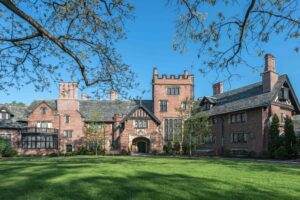
As part of the archival team at Stan Hywet Hall & Gardens, I have spent that last year working with our archivist, Barb Welch, to create programs that highlight our archive and share untold stories that enrich our interpretation of the Seiberling family. I hope that our work will inspire other archival institutions and museums to create similar programs that will help promote archives throughout the state and broader country.
Archival Programming at Stan Hywet
The Archives Department is relatively new at Stan Hywet Hall & Gardens (SHHG). In 2024, it was decided by leadership that the archives should be separated from the broader Collections Department so that care and focus could be better divided between both large collections of materials. The three main goals of the new Archives Department were to enhance the findability of the archival collections, begin digitization efforts that would make the archive more accessible to the public, and to create programs that incorporated new discoveries into the existing interpretation of the historic home and the family that lived in it.
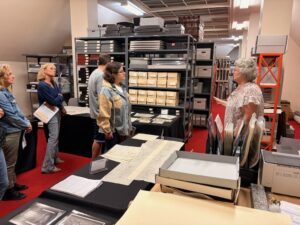
In the last two years, many efforts have been made in all three goals, however, the most exciting centers around the design of several programs. The first of the programs created came about naturally as a way to announce the new department and showcase the archive collection in a new way. SHHG members were invited to come visit the archival storage space and talk with myself and Barb about specific archive materials we had chosen to display. This event became the first Secrets from the Archives, a program series that has become a big success amongst our members and everyday guests.
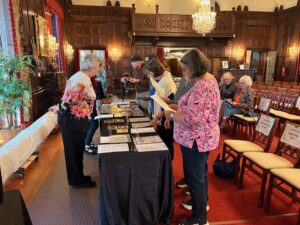
Each Secrets from the Archives has a specific theme so the chosen archive materials displayed tie together similar to an exhibit. During the program, Barb and I will discuss the theme, explain the chosen materials, and provide context. Guests are then invited to come and view the documents up close and ask questions. So far, we have created eight distinct Secret from the Archives programs focused on themes like travel, parties and events held at Stan Hywet Hall, and hobbies of several family members.
The program has demonstrated the often untapped potential of simply displaying archival documents and providing observers with enough context that they can find relatable strands of the human experience. Guests have expressed appreciation for the opportunity to see the archive materials in person and hear new stories about the historic house and its family. The more nuanced stories also make the Seiberling family members feel more familiar and likable as more of their unique personalities are displayed through their archival materials.
The newest program incorporated at SHHG seeks to provide guests with a uniquely archives-led tour of the historic estate. Walk with an Archivist centers around archival documents that enhance topics already discussed during tours, directly connecting the primary sources to the interpretation. Guests are provided with handouts with copies of photographs, blueprints, or excerpts of letters. The tour is then crafted around the archives featured within the handout and led by myself or Barb. The tour group then ends in the archival storage space where the guests can then see the original archival materials that are featured in the handout.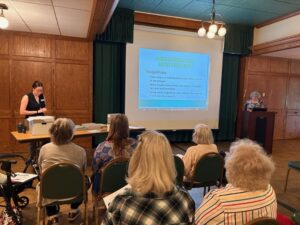
The current Walk with an Archivist is focused on the construction of Stan Hywet Hall and references letters sent between family members and the contractors involved in the home’s design and construction, blueprints, and photographs documenting the construction process. The plan is to create new themes quarterly to freshen up the experience and provide new stories to our audience.
Programs can also be one-off educational presentations such as our Preserving Your Family History program. This program offered participants a simplified explanation of common archival care standards and ways that the public can better care for, organize, and store their family archives. Many guests to this program described themselves as the “family historian” and demonstrated passion for preserving their family photographs, documents, and other mementos.
Overall, the goals of all these new programs was to spark a drive for historical discovery and keep people’s investment in SHHG. By publicly showcasing SHHG’s archival collection, our audience gains a stronger appreciation for our work and a better understanding of why archival work is important. As a museum, the programs also provide an opportunity for our audience to get closer to the family and the house we are interpreting through our tours and exhibits.
Why it Matters
The creation of programs centered on archives are not without their valid concerns such as preservation and privacy. Each institution is beholden to their own policies, internal practices and missions. Not all archives function as museums with publicly accessible places to engage the public with archival materials. Additionally, there is a fine line that must be kept between preservation standards and the display of original archive materials. I understand the limitations archives can face regarding programming and public outreach. However, I wished to share some examples of archival programs that have worked within my experience in the archive field, in the hopes that some may be inspired to create similar programs.
As a member of the Advocacy and Outreach Committee, it’s important to me that archival institutions gain insight to different methods of maintaining relevancy locally, regionally, and nationally. I know I am preaching to the choir when I reiterate the significance of self-promotion and outreach within the archival field, especially on the local level. By taking the archives out of their boxes and finding suitable way to share them with your audience, you are broadcasting your relevance in an engaging way that builds a stronger connection between your institutional mission and your audience’s attention.
As we reach the end of Archives Month, I hope these examples of archival programs inspire my fellow archivists and museum colleagues to consider ways they can utilize their collections to foster interest and relevance amongst their audiences.
Last Updated on October 30, 2026 by Amber Bales