
The following statements were given by the candidates seeking election as officers or council members to the Society of Ohio Archivists in 2026. Voting will be open May 1-15 (at noon), 2026. Candidates were asked to answer all questions in one essay of up to 1,000 words:
- What skills and experiences can you offer to SOA?
- Tell us about your past experience that would make you a good fit for this position.
- What issue or theme would you like to address during your terms?
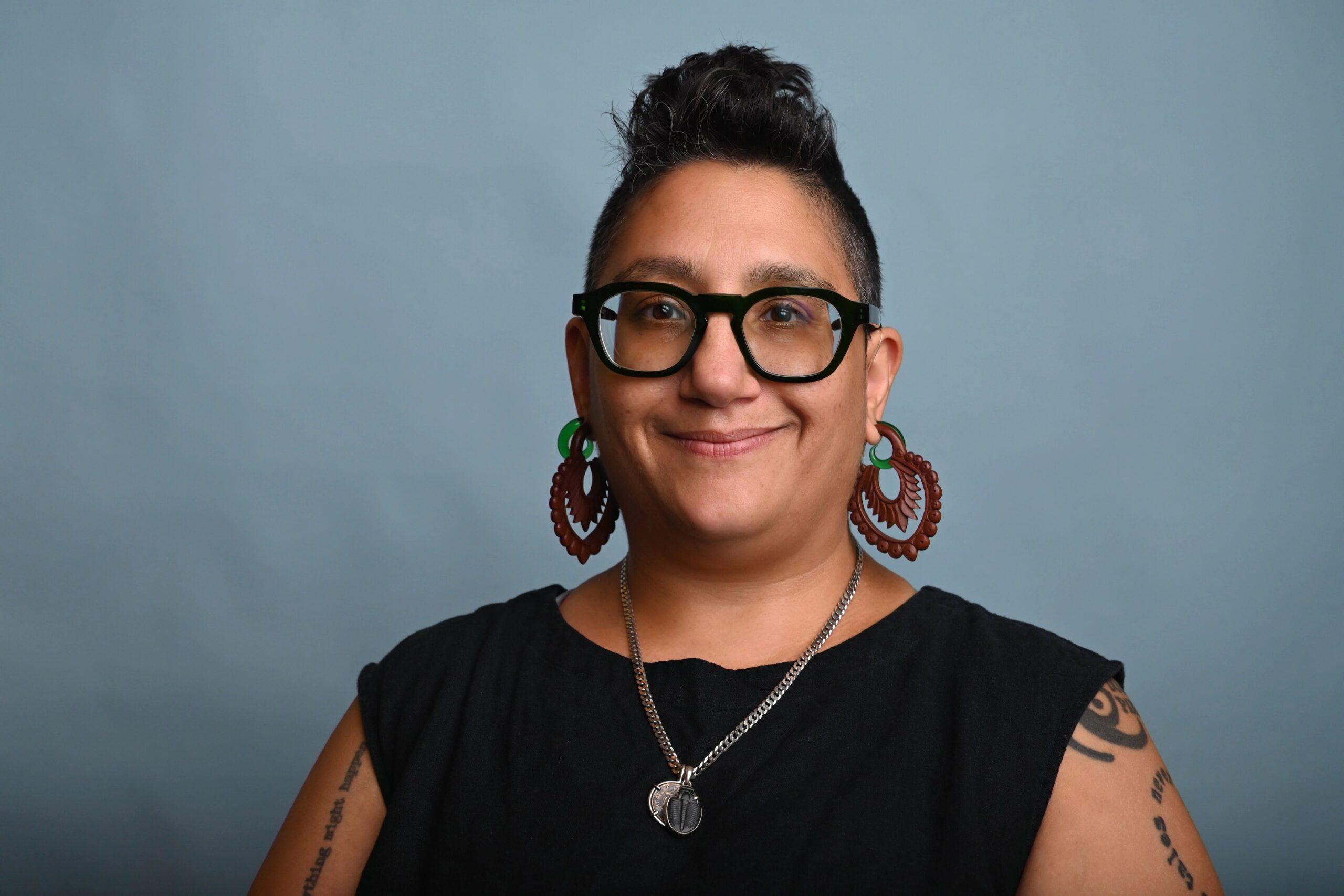
Michelle Ganz, candidate for Vice President / President Elect
Open Council Position: Vice President/President-elect
Candidate’s Name: Michelle Ganz
Current Job Title: Director of Archives
Current Place of Employment: Dominican Sisters of Peace
My entire career has been focused on making the archival profession and archival collections more diverse, inclusive, honest, and accessible. As a lifelong advocate I have no problem putting myself out there to promote a new idea or program, but I recognize that not everyone feels comfortable being the voice of something new. It is incumbent on those of us who do speak up to reach out to our less vocal peers to get their perspective and insight. In the current politically charged landscape it is more important than ever for archives to stand up for democracy and truth. I would use my term to help connect SOA members to the communities, resources, and support they need to make their own DEI efforts more effective. In my short stint as co-chair for the JEDAI committee I have seen the commitment SOA members have to equity, diversity and inclusion.
Over the course of my nearly 20-year career I have held leadership positions in SAA ranging from section steering committees and chair positions to appointed positions on task forces and appointed groups. I have served on the ACA board and held numerous positions on ACA committees and task forces. Throughout all my years of service I have always worked to make the archives profession more diverse, more accessible, and more inclusive.
I would like to address the issues around accessibility and diversity within the archives field. My motto has always been no archive is complete unless all voices are heard. It is all about recognizing that not everyone moves through the world like I do and the right thing to do is to allow people to move through the world in a way that works for them. As SOA VP/President elect I will make my term the year of accessibility focusing on how we can integrate accessibility into our work. Building on the work done by SOA Council, Standing Committees, and individual members I want to support new initiatives while strengthening the longstanding work of SOA within the larger archival community.
Previous Positions
Archivist: History Factory, Chantilly, VA 2021-2022
Archives Director: McDonough Innovation, Charlottesville, VA 2015 – 2021
Archivist and Special Collections Librarian: The Abraham Lincoln Library & Museum and Lincoln Memorial University, Harrogate, TN 2007-2015
Student Assistant: The Ohio State University Archives, Columbus, OH 2002-2003
Education
Certified Archivist (CA), The Academy of Certified Archivists, 2008, Recertified 2013, 2019
Master of Library and Information Sciences (MILS), The University of Arizona August 2006
Bachelor of Arts, Humanities (BA), The Ohio State University March 2003
Professional Associations
Society of American Archivists (SAA):
- Council Member: 2023-2025
- Annual Meeting Host Committee co-chair: 2023
- Archives & Archivists of Color Section Steering Committee: 2022-2023
- American Archivist Reviewer: 2021-present
- Accessibility & Disability Section Chair: 2020-2021
- Vice Chair/Chair-elect: 2019-2020
- A&D Section Co-founder: 2019
- Women Archivists Section Steering Committee: 2019-2021
Dominican Archivists in Collaboration (DAC) Board member at large: 2022-2023
Archivists for Congregations of Women Religious (ACWR): Education Committee: 2022-present
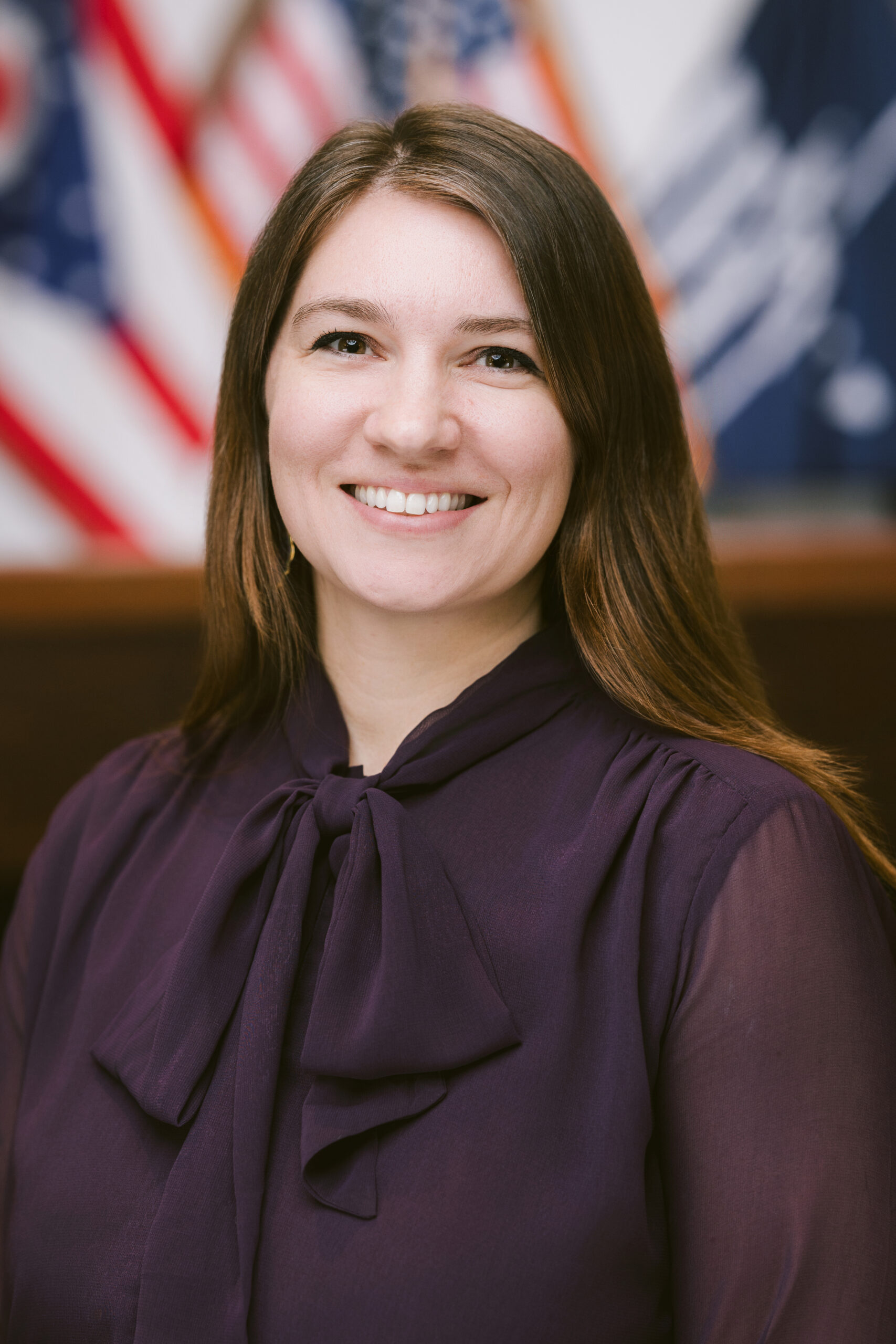
Sophia McGuire, candidate for Treasurer. Headshot by Robb McCormick Photography.
Open Council Position: Treasurer
Candidate’s Name: Sophia McGuire
Current Job Title: Deputy Clerk of Council
Current Place of Employment: City of Gahanna
I am so grateful for the opportunity to run for a second term as Treasurer of the Society of Ohio Archivists. I have been working in the field for around 15 years, professionally for 12 years, with diverse experience in local government records, university special collections, college archives, museum education, and religious archives. I am a major proponent of archival advocacy and have spent much of my career working to elevate records and archives programs within smaller institutions.
As the current Treasurer for SOA, I carry out all fiscal duties for the organization. These include paying invoices, tracking expenses, drafting the annual budget, submitting monthly reports to the Council, and ensuring our tax documents are filed appropriately. I work to keep the council members informed of all issues related to SOA’s finances and to ensure transparency. In addition to my work for SOA, nearly all of my prior professional roles have included financial responsibilities ranging from developing and tracking budgets for entire departments, managing grants, and paying invoices. In addition to my day-to-day work coordinating the records management & archives program for the City of Gahanna, I handle all invoices, credit card reconciliation, and in 2024 carried out an OHRAB grant project that involved both city finances and a matching OHRAB award. Over the years, I have proven myself capable of and comfortable with stewarding the finances of an organization and the public.
Every year, SOA must make decisions on how to best use its finances. When discussions involving financial issues come up, I am quick to ask questions and engage in further discussion to determine how a project or issue will impact our budget. A relevant and recent example is SOA’s decision to amend the 2025-2026 budget to include additional scholarship funds for the joint MAC-SOA conference. Ultimately, we made a strong decision to offer more scholarship opportunities while remaining in a comfortable position with the organization’s budget. Although budgeting may not be the “exciting” part of archival work, it is a vital component that ensures council and committees can continue to carry out SOA’s excellent programming and event offerings.
Previous Positions
Assistant Director of Archives, Dominican Sisters of Peace, 2022-2023
Special Projects Coordinator (Records), Licking County Prosecutor, 2020-2022
Special Projects Coordinator (Records), Licking County Records & Archives, 2019-2020
Records Manager & Archivist, Licking County Government, 2014-2019
Education
Certified Records Analyst, ICRM, 2023
MLIS – Archives & Records Management concentration, University of Pittsburgh, 2014
BA, History of Art, Ohio State University, 2012
Professional Associations
Society of Ohio Archivists (SOA), Treasurer – 2024-present
National Association of Government Archivists and Records Administrators (NAGARA), Local Government Representative, Board of Directors – 2025-present
Society of American Archivists (SAA), Records Management Section Leader 2022-present
Institute of Certified Records Managers (ICRM), member 2023-present
Ohio Municipal Clerks Association (OMCA), member 2023-present
International Institute of Municipal Clerks (IIMC), member 2023-present
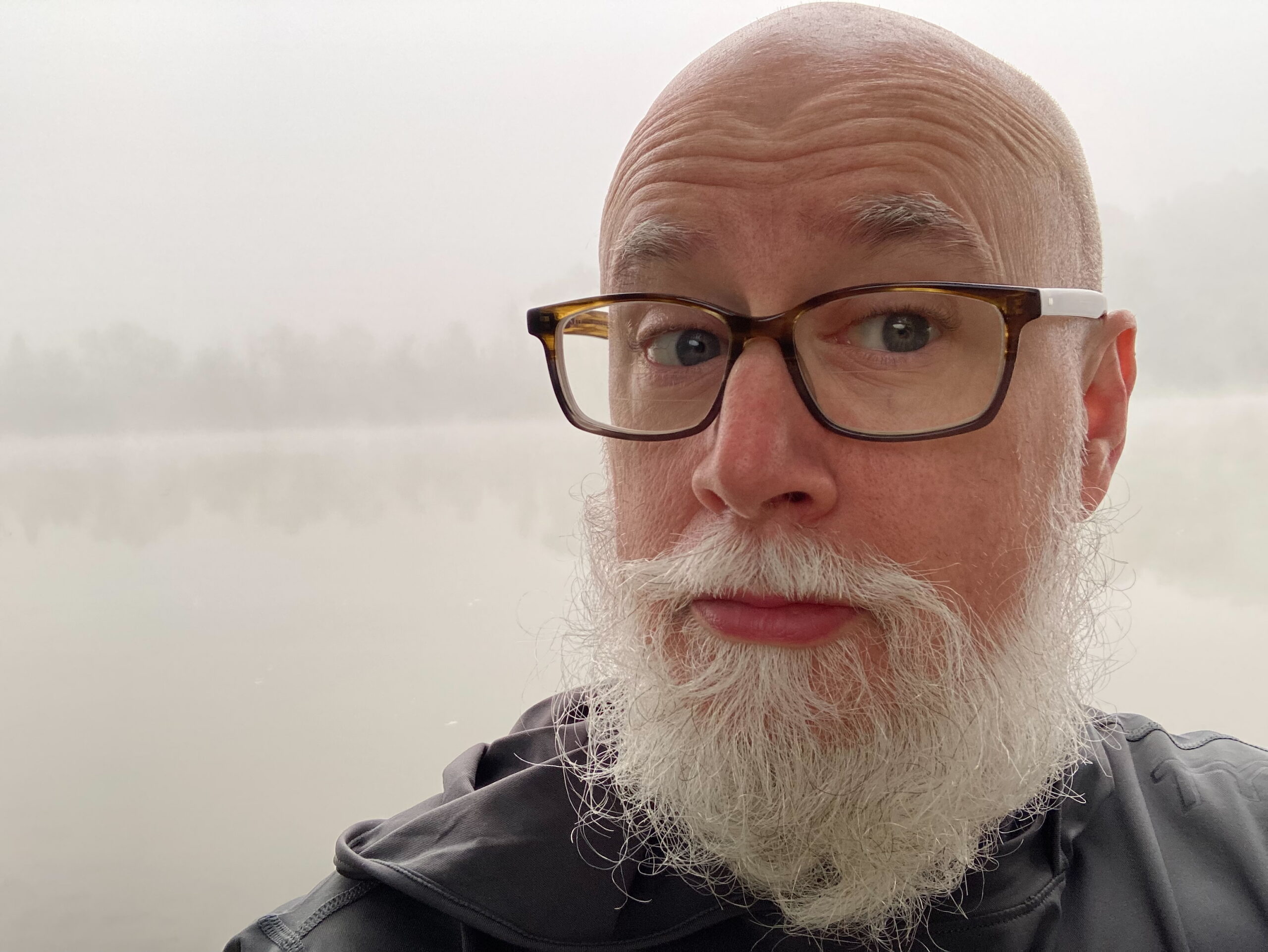
Jim DaMico, candidate for At-Large SOA Council member
Open Council Position: At-Large SOA Council member
Candidate’s Name: Jim DaMico
Current Job Title: Archivist
Current Place of Employment: Cincinnati Children’s
Q1) As a current at-large member, in 2025 we began to offer quarterly informal coffee chats to the community via the Zoom platform, and these have proven to be very popular. I look forward to continuing this effort with my fellow at-large member. In addition, I offer my 16 plus years of experience working in a diverse range of archives and serving on committees, from which I have developed excellent organizational and collaboration skills. I believe that working as a solo archivist in a medical archive will bring a different perspective to SOA as well.
Q2) I served as the chair of the Ohio Preservation Council (OPC) from November 2021- November 2023 and during this time, I worked with the leadership team of nine to update OPC’s bylaws to establish a community liaison role, collaborated with the Ohio Digitization Interest Group to craft a memorandum of understanding to partner with OPC, and collaborated with the State Library of Ohio on the LSTA Preservation and Conservation grant, for which OPC created the educational modules and reviewed grant applications. We reviewed all aspects of the grant process to make it more inclusive to a wider audience. Prior to becoming chair, I was chair-elect and was responsible for managing and promoting OPC’s Professional Development grant.
I served on the New England Archivists Education Committee as chair from 2010-2014 and led a team of seven to develop workshops for biannual and standalone meetings, acquired and reviewed curriculum development services from independent contractors, and liaised with the Society of American Archivists Education team to bring the Digital Archives Specialist curriculum to NEA members.
Q3) I believe that SOA should continue to diversify the membership to include more non-academic archives, such as all-volunteer organizations that have little to no archival experience but have historic collections and non-traditional citizen archivists. In my experience as a member of a variety of professional organizations, I have observed that they skew toward academic institutions, and coming from non-academic institutions, I did not feel that my experience was well represented. Addressing this will encompass all four core values of SOA. Another area that SOA can help address is the impact that the management of archives has on climate change, especially in light of the march toward intergrating artifical intellegence into archival processing, research, and collections management. This can take the form of inviting speakers to present via webinars and publishing articles in the SOA newsletter.
Previous Positions
Curator of Audiovisual Collections, Cincinnati Museum Center, 2014-2021
Special Collections Curator, Rhode Island Historical Society, 2007-2014
Education
MLIS, University of Pittsburgh, 2005
BS, Film and Video, Rochester Institute of Technology, 1994
Professional Associations
Society of Ohio Archivists: 2015-present
- At large council member: November 2023-present
- Regional Archival Associations Consortium Member: December 2024-present
Cincinnati Area Health Sciences Libraries Association: 2022-present
- Vice President/President Elect: August 2025 –
- Newsletter Co-Editor: September 2024-September 2025
Librarians, Archivists, and Museum Professionals in the History of the Health Sciences (LAMPHHS): 2022-present
Cincinnati Area Archivists Roundtable: 2015-present
Ohio Preservation Council: 2017-present; Chair: 2021-2023; Chair Elect: 2020-2021
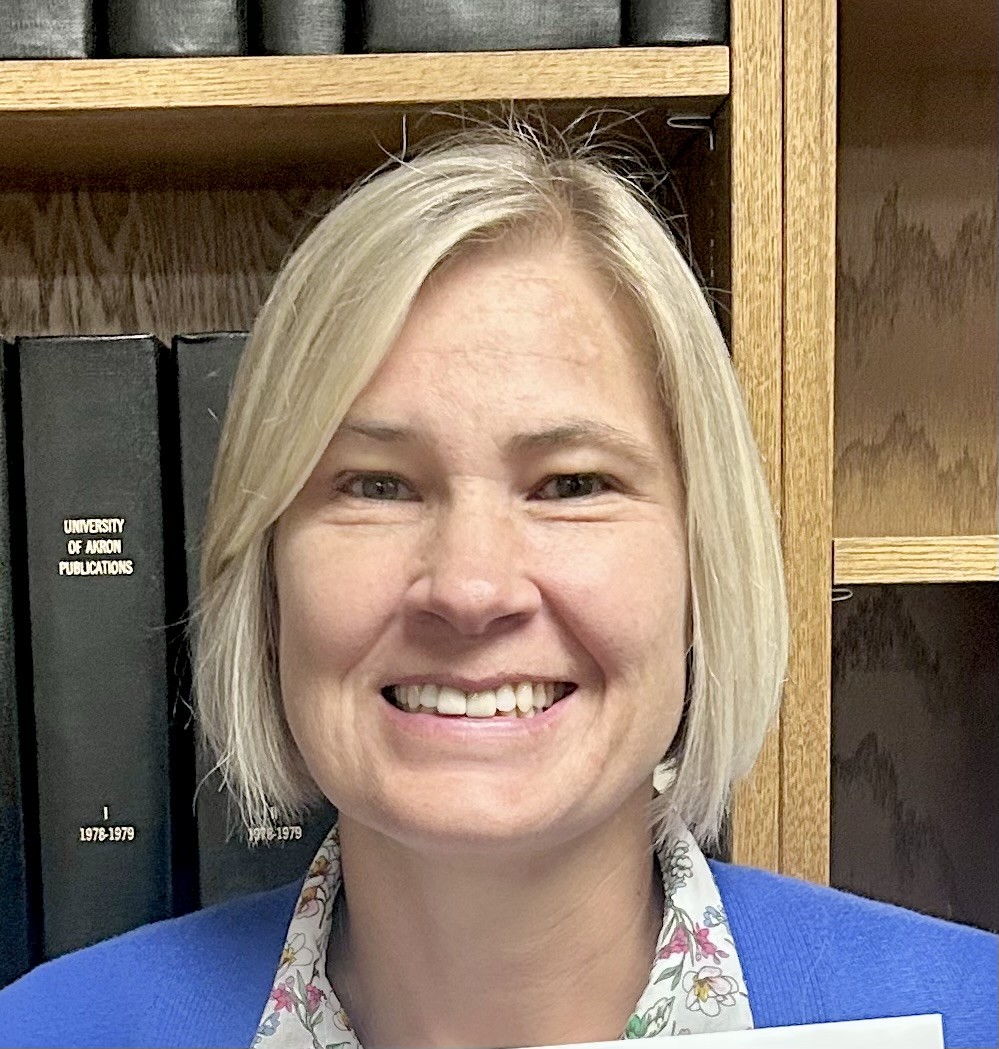
Hannah Kemp-Severence, candidate for JEDAI Co-Chair
Open Council Position: JEDAI co-chair
Candidate’s Name: Hannah Kemp-Severence
Current Job Title: Assistant University Archivist and Records Manager
Current Place of Employment: University of Akron
Working in the archival field for the past 20 years has provided me with varied experiences that inform my perspective and outlook on the importance of archival work, both inside and outside the profession. Building appraisal, arrangement, and description skills, along with learning the tenets of records management and the differences in application at private, non-profit, and public entities has helped me to appreciate the diversity in the archival field on many levels. My experiences have brought forth the importance of public records law in preserving information for the public as well as unearthing stories of underrepresented groups and communities. The importance of preserving stories that may otherwise be lacking in the historical record is a key motivation for me.
I was first introduced to the diversity in archival work as an intern with the manuscripts division of the Hayes Presidential Center. I experienced processing and digitization for the first time, and even preservation and conservation work along with exhibit preparation and grant planning. At my first processing position at the Western Reserve Historical Society, I had a wonderful mentor who taught me so much about archival work, and also the importance of documenting under-represented collection areas. She taught me how to think creatively and innovatively about accomplishing this work under the constraints of a bare bones budget and often-times the lack of upper level administration’s support. My experiences at different types of institutions, from a non-profit regional historical society to the academic setting, with variances between public and private institutions exposed me to a range of collections, resource allocation strategies, and professional development opportunities that will help me provide guidance to the JEDAI committee and its work.
My graduate studies in applied history and public humanities, especially the museums and archives coursework that focused on cultural competency, allowed me to delve into DEAI work being done in the library and archives profession. I was able to explore the many facets of this work nationally, statewide and locally, and the changes it was bringing to the field – both in terms of archival tenets and working conditions for members of the profession. Readings from the Certified Archivist Exam reading list supported this exploration. Having experienced term employment in a variety of settings, I am especially cognizant of the efforts in the field to recognize the hardships these types of employment situations can place on individuals and grateful for the work being done to improve these situations, among many other improvements in areas like reparative description, relationships with community archives, and recognizing the lack of in diversity in the field.
Drawing on my experiences and interests, during this upcoming term with the JEDAI committee, I would like to address the availability of resources for JEDAI related projects, initiatives, and activities. From barriers to entering the profession to community archiving projects, or just making a reading room accessible for everyone, sometimes it is difficult to know where to start, especially with low staffing and budgets. A major goal of the committee this year is to compile tool kit resources and make them available to share with SOA and the wider community. I am extremely excited to be a part of this effort to help provide guidance to archivists and community members of various skill and budget levels, on issues that address the importance of JEDAI initiatives in the archives profession and the broader community.
Addressing the need for a JEDAI resource center is important to me also because it is one way for us to work to ensure that everyone feels safe and welcome in SOA and that their work is truly valued. It is my hope that these tool kit resources can help SOA members and their communities build skills in how best to steward JEDAI focused collections, how to approach all archival work from a more culturally competent and accessible lens, how to approach equity and accessibility from an employment perspective, and how to build relationships with underrepresented communities to build community archives and archival collections that fit the mission and needs of such communities. I feel these resources would also be applicable to building and maintaining an inclusive and safe environment in SOA where questions are welcomed and all types and levels of archival and information work are valued and deemed worthy, from students to community volunteers, newly graduated practitioners, to those with years and years of experience and multiple certifications in the field.
I thank you for the opportunity to be considered for JEDAI committee co-chair and I hope to help create an ever more just, equitable, diverse, accessible, and inclusive organization for the betterment of the archives profession.
Previous Positions:
University Records Manager, University of Akron, Akron, Ohio, 2021-2026
Library Assistant 5, Scholarly Resources and Special Collections, Kelvin Smith Library, Case Western Reserve University, Cleveland, Ohio, 2018-2020
Manuscripts Processing Supervisor, Cleveland History Center of the Western Reserve Historical Society, Cleveland, Ohio, 2009-2018
Howard Metzenbaum Congressional Papers Processing Supervisor, Cleveland History Center of the Western Reserve Historical Society, Cleveland, Ohio, 2008-2009
LTV Steel Project Processor, Cleveland History Center of the Western Reserve Historical Society, Cleveland, Ohio, 2004-2006
Education:
M.A. Applied History and Public Humanities, The University of Akron, 2024
Graduate Certificate of Public Humanities, The University of Akron, 2024
B.A. Political Science, Bowling Green State University, 2003
Professional Associations:
Midwest Archives Conference, 2025-present
National Association of Government Archives and Records Administrators, 2025-present
Academy of Certified Archivists, 2025-present
Society of Ohio Archivists, 2013-present, JEDAI committee (2023-present; co-chair, 2025-2026)
Cleveland Archival Roundtable, 2016-2024
Society of American Archivists, 2015-2016; 2024
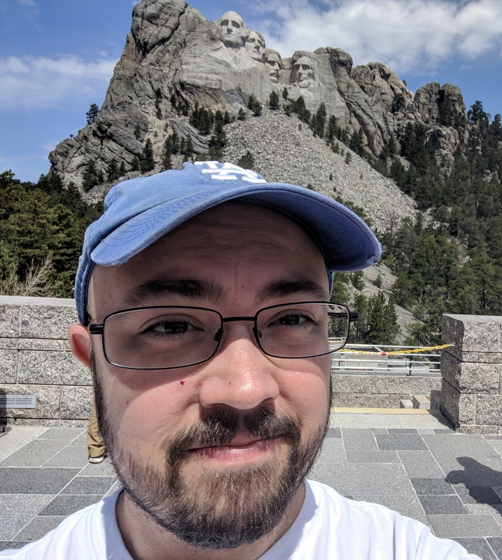
Kris Kallies, candidate for JEDAI Co-Chair
Open Council Position: JEDAI co-chair
Candidate’s Name: Kristopher (Kris) Kallies
Current Job Title: Archivist
Current Place of Employment: Museum & Collector Resource
Equity in archival practice begins with recognizing that communities encounter archives from different historical, cultural, and social positions. Responsible stewardship requires meeting people where they are rather than where archival systems have historically expected them to be. Perspectives expand our field. When archivists rely on procedural neutrality alone, we risk reinforcing silences embedded in the record. Equity work calls us to approach collections, colleagues, and communities with contextual awareness.
As Verne Harris remarked, archives never neutral. They are spaces where power is negotiated, contested, and confirmed. That understanding has shaped my professional approach. Archival work is inseparable from the social realities that produce records, the communities who seek themselves within them, and the perspectives archivists bring to stewardship.
My professional path has been shaped by geographic mobility across multiple environments, each exposing me to different archival cultures, constituencies, and equity challenges. These experiences made clear that equity is not static but shaped by local history, community relationships, institutional priorities, and professional climate.
My earliest exposure came at The Buffalo Bill Center of the West in Cody, Wyoming. My responsibilities intersected with NAGPRA related issues, provenance research, tribal consultation, and culturally sensitive materials, reflecting the ethical obligations institutions hold toward descendant communities. Stewardship in this context required accountability, respect, legal responsibility, and ongoing communication with living cultures whose histories were represented in the collections.
The Center operates within a region shaped by complex relationships between nineteenth century settler descendant populations and the nearby Wind River Indigenous communities. These groups approach collections through different historical frameworks and expectations. Community memory, institutional narrative, and archival description intersect in ways that shape how history is understood and who feels represented. Archives must remain attentive to these dynamics when presenting cultural narratives and shaping descriptive practice.
My subsequent work at The University of the South in Sewanee, Tennessee, exposed me to equity challenges embedded within institutional archives. The archive’s documentary record reflected the ideological framework of a university founded in the nineteenth century “Old South” model. Preserved voice imbalances emphasized how archival backlogs and collecting priorities can perpetuate narrow historical narratives long after institutional missions evolve. Processing decisions, descriptive language, and contextual framing all carry equity implications and shape how future researchers interpret the past.
This became tangible when a bust of Confederate General and Sewanee founder Leonidas Polk was surreptitiously removed from public display by an anonymous student and transferred to the archives. While leadership navigated the public dimensions, I accessioned the object into the repository. The campus conversation became about the difference between commemoration and documentation. Once relocated, the object shifted from honorific symbol to historical evidence. My duty was to ensure its provenance, context, and removal were responsibly preserved so that both the original intent and the contemporary moment of reassessment were documented.
While at Louisiana State University in Baton Rouge, my equity work expanded into workplace climate and professional culture. Mine was the most demographically, culturally, and religiously diverse cohort LSU Libraries had ever hired. Our arrival coincided with institutional investment in diversity initiatives. I participated in exhibits, student engagement events, scheduled speaker programs, and ethics training that foregrounded underrepresented perspectives while fostering dialogue across professional and student communities. These initiatives emphasized not only representation but professional preparedness, equipping emerging archivists and librarians to navigate ethical tensions, contested histories, and community accountability within their own institutions.
As national and state political climates influenced university policy, priorities shifted and work narrowed. By the end of my contract, every member of that cohort, along with key equity leadership, had departed. Recruitment alone doesn’t constitute equity. Sustainability, institutional support, mentorship structures, and professional climate are essential to retention and long-term change.
Across these environments, Indigenous repatriation, legacy institutional archives, contested commemorative objects, and workplace culture, I’ve come to view equity as both infrastructural and relational. It shapes how we process records, steward difficult histories, support colleagues, and engage communities whose identities intersect with our collections.
Looking forward, I believe the Society of Ohio Archivists is positioned to sustain equity work as many institutions face constraints on diversity initiatives. As an independent professional body, SOA can provide continuity where universities may experience limitations. I’m interested in developing frameworks supporting archivists whose programming or outreach has been curtailed, including resource toolkits, virtual programming, peer networks, and practical guidance on inclusive description grounded in archival ethics and professional standards. Such work can also create mentorship pathways and shared problem-solving spaces for practitioners working in politically or administratively constrained environments.
Within that commitment, I’m also interested in ensuring antisemitism remains visible within our profession’s equity framework. In a moment when global conflicts have heightened public scrutiny of Jewish identity, it is important to recognize that Jewish political thought and communal experiences are not monolithic. Charged environments can sometimes flatten complexity, treating individuals as representatives of events beyond their control. While recognized and protected in archival values statements, Jewish identity is not always apparent like race or gender expression are. Many Jewish professionals are perceived as solely white until their identity becomes known, creating moments where vulnerability is underestimated.
My interest stems purely from a conviction that equity work must remain attentive to less visible forms of identity-based harm while maintaining solidarity across all communities.
Central to my approach is the belief that histories of trauma cannot be treated as competitive hierarchies where one form of suffering is elevated above another or dismissal of another community’s realities. Archives hold records of intersecting harms, including violence, persecution, and displacement. Our responsibility is to steward these histories with seriousness and context while resisting narrative elevation and marginalization.
If selected to serve on the JEDAI council, I would bring a commitment to sustaining equity work structurally, supporting archivists navigating constrained institutional climates, and ensuring our professional community remains capable of holding complex identities and histories with care.
Council service is both governance responsibility and professional stewardship. My geographic mobility and cross institutional experience reinforce that equity is not static but an ongoing professional obligation requiring adaptability and collective stewardship across the profession.
Previous Positions
Museum & Collector Resource (Private archival consulting firm, client name withheld under NDA guidelines), Archivist, Covington KY, company based out of Fort Lauderdale, FL, Oct. 2025 – Present
Georgia Southern University Libraries, Graduate Student Patent & Trademark Librarian, Statesboro, GA, Aug. 2023 – May 2025
Louisiana State University, Archivist, Baton Rouge, LA, Aug. 2021 – Aug. 2022
Sewanee: The University of the South, Archivist, Sewanee, TN, Jan. 2020 – July 2021
The Buffalo Bill Center of the West, McCracken Research Library, Archival Intern, Cody, WY, May 2019 – Aug. 2019
The University of Alabama, W. S. Hoole Special Collections Library, Graduate Student Archivist, Tuscaloosa, AL, Oct. 2015 – Dec. 2017
The University of Alabama, Amelia Gayle Gorgas Library, Student Library Assistant, Tuscaloosa, AL, July 2014 – Oct. 2015
Education
Master of Arts in History, Public History track, Georgia Southern University, May 2025
Master of Library and Information Studies, Archival track, Museum Studies certificate, The University of Alabama, Dec. 2017
Bachelor of Arts in History, The University of Alabama, June 2015
Bachelor of Arts in Journalism and Communications, The University of Alabama, Dec. 2006
Professional Associations
SAA: 2015 – present
MAC: 2025 – present
SOA: 2025 – present
Last Updated on April 10, 2026 by Emily Gainer